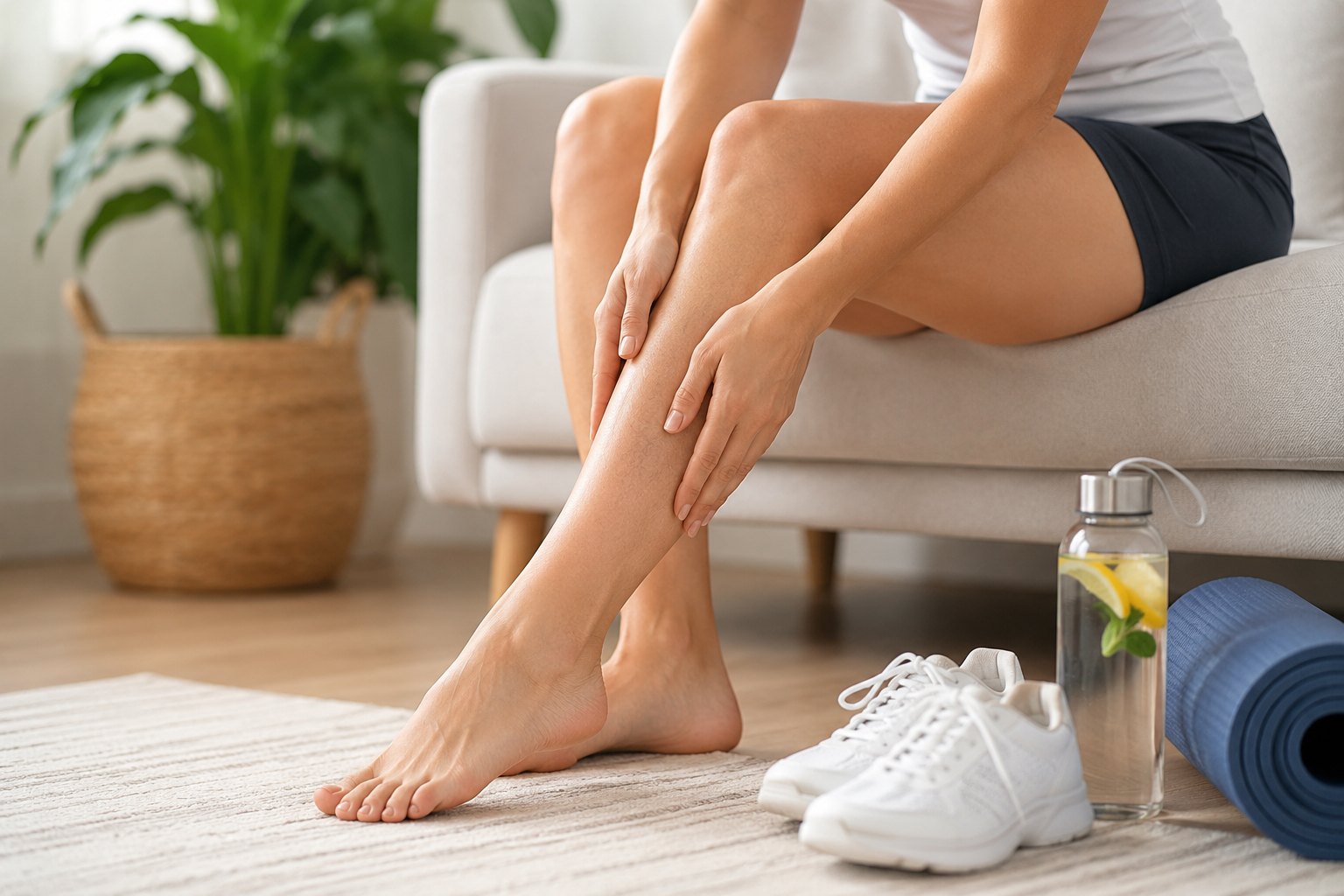
The good news is that simple daily habits can promote healthy blood circulation, reduce the feeling of heavy legs, and improve overall comfort.
Why do varicose veins develop?
Varicose veins are caused by the permanent enlargement of certain veins, most commonly in the legs. When the vein valves become less effective, blood has a harder time flowing back toward the heart.
Several factors can contribute to their development, including:
– Heredity
– Pregnancy and hormonal changes
– Prolonged standing or sitting
– Physical inactivity
– Excess body weight
– Aging
– Previous leg injuries or venous conditions
What symptoms are associated with varicose veins?
Varicose veins are not only a cosmetic concern. They may also be associated with chronic venous insufficiency.
Common symptoms include:
– Heavy or tired legs
– Pain or discomfort
– Swelling in the ankles or legs
– Itching
– Night cramps
Symptoms vary from person to person.
1- Stay active
Regular physical activity is essential for promoting healthy blood circulation. The muscles in your legs act as a natural pump, helping blood return to the heart.
Activities to prioritize include:
– Walking
– Cycling
– Swimming
– Low-impact exercises
Even short periods of daily activity can positively support venous circulation.
2- Avoid staying in the same position for too long
Remaining seated or standing for extended periods can slow circulation and increase pressure in the leg veins.
Simple tips include:
– Get up and move every 30 to 60 minutes.
– Alternate positions throughout the workday.
– Perform ankle and calf flexion exercises.
– Avoid standing or sitting still for long periods.
These habits are especially important if your job requires prolonged standing or sitting.
3- Elevate your legs
Elevating your legs helps improve venous return and reduce the feeling of heaviness.
You can incorporate this habit by:
– Elevating your legs for a few minutes at the end of the day
– Using a pillow to support your legs
– Lying down with your legs slightly elevated
4- Wear compression stockings
Compression stockings help support the veins and promote healthy blood circulation.
They may be beneficial:
– During long days spent standing
– While traveling by plane or car
– If you experience heavy legs
Choosing the appropriate level of compression is important. A healthcare professional can recommend the option best suited to your condition and needs.
5- Stay hydrated and maintain a balanced diet
Good hydration and a healthy diet contribute to overall vascular health.
Remember to:
– Drink enough water every day
– Limit excessive salt intake, which can contribute to fluid retention
– Eat plenty of fruits, vegetables, and fiber
– Maintain a healthy weight to reduce pressure on your legs
6- Avoid excessive heat
Heat can cause veins to dilate, increase the feeling of heavy legs, and make symptoms more noticeable or uncomfortable for some people.
Try to avoid or limit:
– Very hot baths
– Extended time in hot tubs
– Saunas
– Prolonged exposure to high temperatures
7- Choose comfortable clothing
Very tight clothing may reduce comfort and affect circulation, particularly around the legs, waist, and ankles.
What doesn’t really work
Creams and so-called “miracle” products cannot treat varicose veins at their source. A professional evaluation remains the best way to assess your venous health and determine the most appropriate treatment.
Can varicose veins get worse?
Over time, varicose veins may become more visible and more uncomfortable. In some cases, they may be associated with persistent swelling, skin changes, or other venous and circulatory complications. Early evaluation allows your condition to be assessed and the most appropriate treatment plan to be recommended.
When should you consult?
It is recommended to seek medical advice if you notice:
– Visible, enlarged, or twisted veins
– Heavy or tired legs
– Swelling in the ankles or legs
– Pain, cramps, or itching
– Gradually worsening symptoms
A medical evaluation can provide an accurate diagnosis and determine whether treatment is recommended.
Effective treatments are available
Today, several safe and effective treatment options are available for varicose veins.
Depending on the type of varicose veins and your medical assessment, treatment options may include sclerotherapy, ultrasound-guided procedures, or other specialized approaches.
Discover our varicose vein treatment options
Book your personalized evaluation
Key takeaways
Preventing varicose veins starts with simple daily habits: stay active, avoid prolonged sitting or standing, elevate your legs regularly, and maintain a healthy, active lifestyle.